Goals tell you where to go. Habits get you there. Here’s how to connect them.
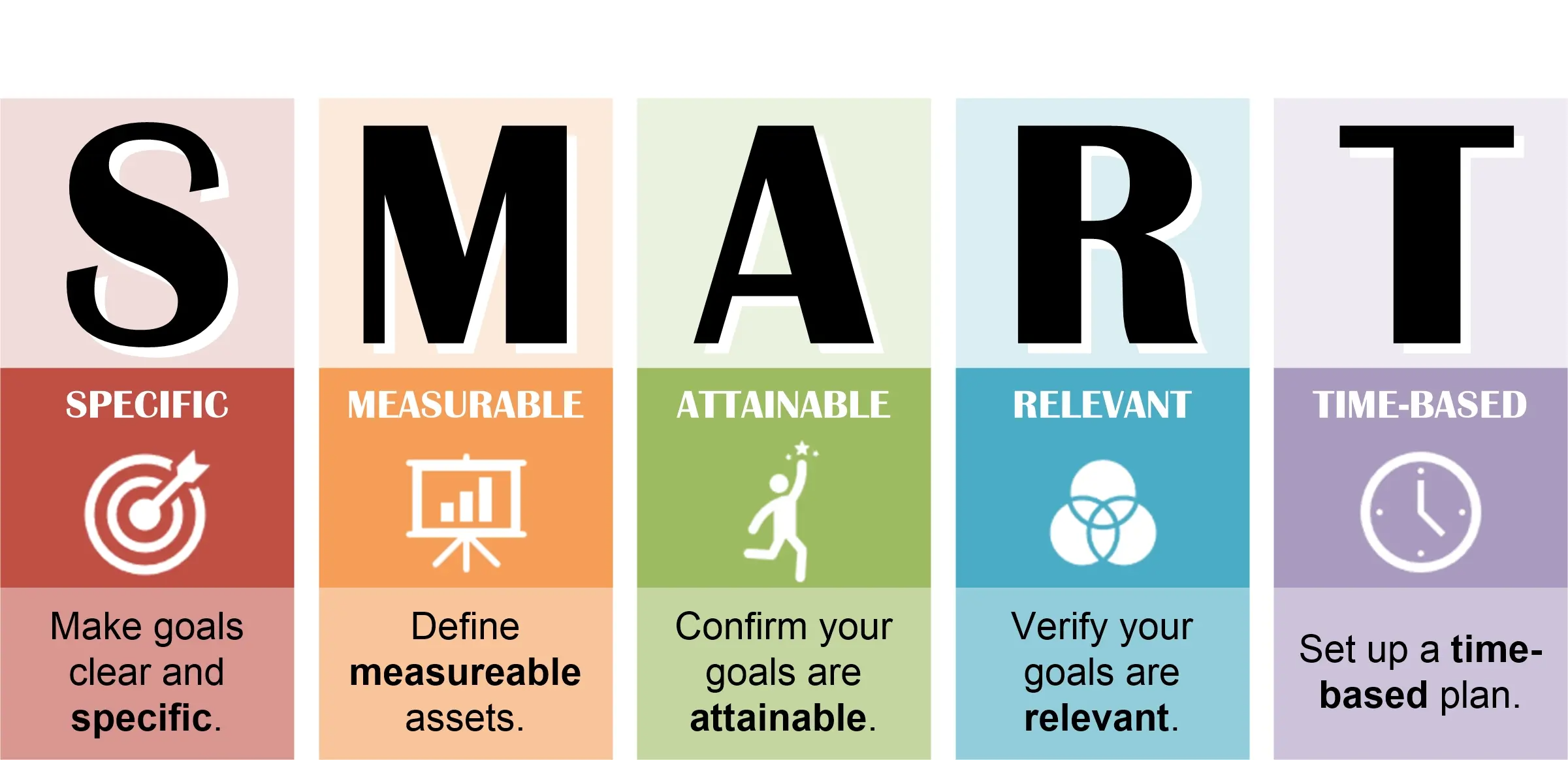
SMART goals are one of the most common goal-setting methods. You’ve probably done one before. Specific, measurable, achievable, relevant, time-bound. The framework is solid. The logic is sound.
And yet, by February, most goals are abandoned.
Not because the goal was wrong. Because there was no bridge between the goal you set and the days you actually lived.
That bridge is habits.
James Clear advocates for not focusing on the goals; instead, work on the systems to achieve them. I agree with that. What he is saying is not to focus on the goal. But you must have a goal.
Goals without habits are wishes. Habits without goals are merely routines that go nowhere. But when you connect the two—when every small daily action feeds a larger purpose—something clicks. Progress stops being theoretical and starts being inevitable.
This guide shows you how to build that connection.
The Problem with Goals Alone
SMART goals are great at defining what you want. They fail at telling you what to do tomorrow.
“Lose 20 pounds by June” is specific, measurable, achievable, relevant, and time-bound. It checks every box. But when your alarm goes off at 6 AM, that goal doesn’t help you decide whether to work out or hit snooze.
Goals operate at the wrong altitude. They’re the destination, not the directions.
Here’s what happens when you rely on goals alone:
Motivation fades. The excitement of January doesn’t last into March. Without a daily structure, you’re relying on willpower—and willpower is a limited resource.
Progress feels invisible. When your only metric is the end state, every day that you haven’t arrived feels like failure. You lose 3 pounds and feel like you’ve done nothing because you’re still 17 pounds away.
Life gets in the way. Without habits, your goal competes with everything else demanding your attention. The urgent always beats the important when there’s no system in place to protect the important.
You forget why you cared. Goals set in a moment of clarity often become fuzzy over time. The “why” fades, and you’re left going through motions you no longer remember the purpose of.
Goals need something beneath them. Something that operates at the level of Tuesday afternoon, not December 31st.
The Problem with Habits Alone
Habits are powerful. They automate behavior, reduce decision fatigue, and compound over time.
But habits without direction can keep you busy without getting you anywhere.
You might build a perfect morning routine—wake up early, meditate, journal, exercise—and still feel like you’re not making progress on what matters. The habits feel good in the moment, but don’t add up to anything.
Here’s what happens when you focus on habits without goals:
Activity replaces achievement. You’re doing things, but you’re not moving toward anything specific. Motion without direction.
You optimize for the wrong things. Without a goal to filter what matters, you might build habits that feel productive but don’t serve your actual priorities.
There’s no finish line. Habits are ongoing by definition. Without goals to mark progress, you never get to celebrate. You’re just… maintaining.
You lose the why. “I journal every morning” is a habit. But why? If you can’t connect it to something larger, the habit becomes hollow.
Habits need something above them. Something that gives daily actions meaning and direction.
The Integration: Goals Set Direction, Habits Create Motion
The magic happens when you connect the two:
Goals answer: What am I trying to achieve and why?
Habits answer: What will I do today to move toward that?
Think of it this way:
- Your goal is the destination
- Your habits are the vehicle
- Your reflection practice is the GPS—constantly checking if you’re still on course
Without the destination, you’re driving in circles. Without the vehicle, you’re standing still. Without the GPS, you’ll get lost and not realize it until you’re miles off track.
Step 1: Start with a SMART Goal
Before you build habits, get clear on where you’re going.
A SMART goal is:
- Specific: What exactly are you trying to achieve?
- Measurable: How will you know you’re making progress?
- Achievable: Is this realistic given your constraints?
- Relevant: Does this actually matter to you?
- Time-bound: By when?
Example Goals
| Life Area | SMART Goal |
|---|---|
| Health | Lose 20 pounds by June 30 by creating a 500-calorie daily deficit |
| Financial | Save $10,000 for a house down payment by December 31 |
| Professional | Get promoted to senior analyst by Q3 performance review |
| Creative | Finish the first draft of my novel by September 1 |
| Relational | Rebuild trust with my partner over the next 6 months through consistent presence and communication |
Notice that each goal implies action but doesn’t specify daily behavior. That’s the next step.
Step 2: Reverse-Engineer the Habits
Once you have a goal, ask: What would someone who achieves this goal do every day?
This is identity-based thinking. You’re not just building habits—you’re becoming the kind of person who reaches this goal.
The Breakdown Process
For each goal, identify:
- The primary habit: The one non-negotiable daily or weekly action that drives the most progress
- Supporting habits: Secondary actions that reinforce the primary habit
- Reflection habit: How you’ll track, evaluate, and adjust
Example Breakdowns
Goal: Lose 20 pounds by June 30
| Habit Type | Habit | Frequency |
|---|---|---|
| Primary | Track all food intake in an app | Daily |
| Supporting | Prepare meals at home | 5x per week |
| Supporting | Walk 8,000 steps | Daily |
| Supporting | No eating after 8 PM | Daily |
| Reflection | Weigh in and journal about the week | Weekly |
Goal: Save $10,000 by December 31
| Habit Type | Habit | Frequency |
|---|---|---|
| Primary | Automatic transfer of $850 to savings | Monthly |
| Supporting | Review spending and categorize expenses | Weekly |
| Supporting | Wait 48 hours before any purchase over $50 | As needed |
| Supporting | Pack lunch instead of buying | 4x per week |
| Reflection | Monthly money review and journal reflection | Monthly |
Goal: Finish novel draft by September 1
| Habit Type | Habit | Frequency |
|---|---|---|
| Primary | Write 500 words | Daily |
| Supporting | Outline next scene before ending session | Daily |
| Supporting | Read fiction for 20 minutes | Daily |
| Supporting | Weekly writing session of 2+ hours | Weekly |
| Reflection | Review word count and journal about progress | Weekly |
Goal: Rebuild trust with partner
| Habit Type | Habit | Frequency |
|---|---|---|
| Primary | 20 minutes of undistracted conversation | Daily |
| Supporting | Express specific appreciation | Daily |
| Supporting | Device-free meals together | Daily |
| Supporting | Plan and protect weekly date night | Weekly |
| Reflection | Journal about relationship quality and patterns | Weekly |
Step 3: Make Habits Stick
Knowing what habits to build is easy. Actually building them is hard. Here’s what works:
Stack Habits onto Existing Routines
Don’t create new moments for habits—attach them to existing moments.
- “After I pour my morning coffee, I will write for 15 minutes.”
- “When I sit down for lunch, I will log my food first.”
- “After I brush my teeth at night, I will review tomorrow’s priorities.”
The existing routine becomes the trigger. The new habit becomes automatic faster because it’s anchored to something you already do.
Start Embarrassingly Small
Quoting James Clear again, start small. Make choices that are one percent better. These small decisions will compound. Before long, you will notice a huge gap between now and the person you once were.
Your goal might be 500 words a day, but your starting habit should be 50. Your goal might be a 30-minute workout, but start by putting on your gym shoes.
Why? Because the hardest part of any habit is starting. Once you’re in motion, continuing is easier. Make the start so small that skipping it would feel ridiculous.
You can always do more. You can’t always start.
Track Visibly
What gets tracked gets done. Create a simple visual system:
- A calendar where you X off each day you complete the habit
- A habit tracker app that builds streaks
- A journal where you note completion daily
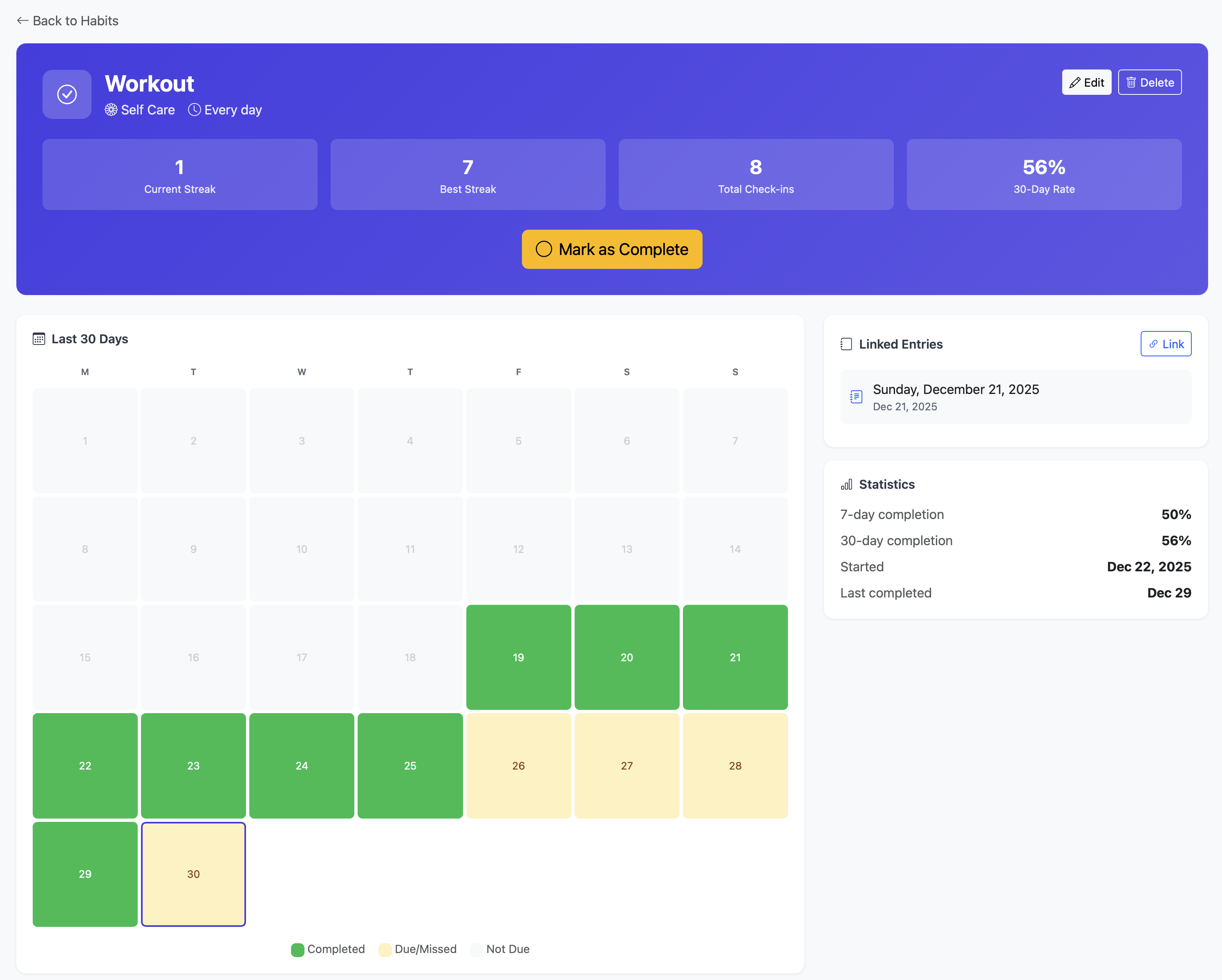
The visual record does two things: it creates accountability, and it gives you data to reflect on.
Reflekt has the best feature for that. You can create your habit and quickly mark it done, or you can document the details of what you’ve done while journaling.
Design for Failure
You will miss days. Plan for it.
The goal isn’t perfection—it’s consistency over time. Build rules like:
- Never miss twice in a row
- If I miss the full habit, I’ll do the 2-minute version
- Missing one day doesn’t erase the streak, it pauses it
Shame doesn’t build habits. Self-compassion and systems do.
Step 4: The Reflection Loop
Here’s where most systems fail: they don’t include reflection.
You set the goal. You build the habits. You track completion. But you never ask: Is this working? What am I learning? What needs to change?
Reflection is critical for this to work. It is the feedback loop that keeps your system alive.
For instance, in my reflection, I quickly realized that if I don’t work out first thing in the morning, it will never happen that day.
Daily Reflection (2-5 minutes)
At the end of each day, ask:
- Did I complete my core habits today?
- What got in the way (if anything)?
- What will I do differently tomorrow?
This isn’t journaling your whole day—it’s a quick check-in that keeps habits top of mind. If you choose to add that to your journal, Reflekt automatically connects that entry to the habit so that you can see what was happening that day and what helped you accomplish it.
Weekly Reflection (15-30 minutes)
Once a week, go deeper:
- How many days did I complete each habit?
- What patterns do I notice? (Energy, motivation, obstacles)
- Am I making progress toward my goal?
- What’s working? What’s not?
- Do I need to adjust anything for next week?
This is where journaling becomes powerful. Writing forces clarity. Over weeks, your entries reveal patterns you’d never see otherwise.
Monthly Reflection (30-60 minutes)
Once a month, zoom out:
- How much progress have I made toward my goal?
- Are my habits actually driving the results I want?
- Is this goal still relevant? Has anything changed?
- What have I learned about myself this month?
- What will I do differently next month?
Monthly reflection is where you catch drift before it becomes derailment.
The Hidden Power of Journaling in This System
Notice that reflection shows up at every level: daily, weekly, and monthly.
Journaling is the connective tissue between goals and habits.
When you write about your goals, you remember why they matter. When you write about your habits, you become aware of what’s working and what’s not. When you write about your days, you see patterns that are invisible in the moment.
But here’s what most people miss: your journal entries contain insights you’re not seeing.
Write for three months about your fitness journey, and somewhere in those pages is the answer to why you always fall off in week 3. Journal about your creative project, and buried in the entries is the pattern of what conditions help you write best.
The data is there. Most people never extract it.
They write, close the notebook, and move on. The patterns stay hidden. The insights never surface.
See What Your Habits Are Actually Telling You
This is why we built Reflekt.
Reflekt is a journaling app that doesn’t just store your entries—it analyzes them. When you write about your goals and habits over time, Reflekt surfaces:
Mood patterns: Are certain days or weeks consistently harder? Is there a correlation between your habits and how you feel?
Recurring themes: What topics keep showing up in your reflections? What are you avoiding? What energizes you?
Goal connections: How does your writing change when you’re making progress versus when you’re stuck? What does your journal reveal about your relationship to your goals?
Habit insights: Which habits consistently show up in positive entries? Which ones do you keep writing about struggling with?
Your journal has been collecting this data all along. Reflekt helps you finally see it.
When you combine SMART goals, daily habits, and reflection that actually shows you patterns—that’s when transformation stops being accidental and starts being engineered.
The Complete System: A Summary
Here’s the full framework:
1. Set a SMART Goal
Define what you want, why it matters, and by when.
2. Identify Your Habits
Reverse-engineer the daily and weekly actions that will get you there.
3. Build the Habits
Start small, stack onto existing routines, track visibly, plan for failure.
4. Reflect Regularly
Daily check-ins, weekly reviews, monthly zoom-outs—all through journaling.
5. Surface the Patterns
Use your reflection data to understand what’s working, what’s not, and what needs to change.
6. Adjust and Continue
Goals and habits aren’t set-and-forget. They evolve as you do.
Start Today
You don’t need to overhaul your life to begin.
Pick one goal that matters to you. Break it down into one primary habit. Start that habit tomorrow—in its smallest possible form. Journal about it for five minutes at the end of each day.
Do that for two weeks, and you’ll have more data about yourself than most people gather in a year.
Do it for three months, and you’ll have patterns emerging that change how you approach everything.
Do it with Reflekt, and you’ll actually see those patterns—without having to dig through pages trying to find them yourself.
Your goals and habits tell a story. It’s time to read it.